1

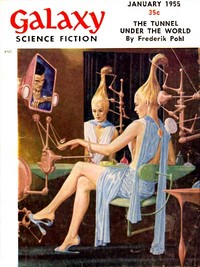
The Tunnel Under the World — Story, Setting & Ideas
(0 User reviews)
1250
Project Gutenberg
2010
Not confirmed
Science fiction
Readers of public-domain and historical texts
Project Gutenberg digital edition
en
Edition facts
Words
14,537
Reading time
64 min
Text sections
2
The catalog record for The Tunnel Under the World — Story, Setting & Ideas provides practical reading context through 14,537 words, 1 hr 4 min estimated reading time, and 2 detected text sections.
The text analysis averages about 12.9 words per sentence, while the detected sections provide another way to judge how the source is divided.
Project Gutenberg metadata also associates the work with “Science fiction,” connecting these edition facts with the source record’s subject description.
Source:
Project Gutenberg record #31979
Frederik Pohl's 1955 novella follows Guy Burckhardt through a recurring nightmare of an explosion, leading him to uncover a surreal conspiracy involving a tunnel, a factory, and the manipulation of reality itself.
Read the complete public-domain text at its original source.
Read on Project GutenbergFrederik Pohl's "The Tunnel Under the World" opens with Guy Burckhardt waking from a dream of a violent explosion, a dream so vivid that he searches the floor for his wife. The story immediately establishes a pattern of repetition: the date is June 15th, and Burckhardt will relive this morning multiple times. Pohl uses the recurring dream as a structural device, blurring the line between sleep and waking. The narrative moves from domestic morning routines to a growing sense of unease, as Burckhardt notices discrepancies in his town of Tylerton. The tunnel of the title becomes a literal and metaphorical passage into a hidden layer of reality, leading to a factory where human minds are duplicated and controlled.
Recurring Dreams and Waking Doubts
The story's structure hinges on repetition. Burckhardt's dream of an explosion recurs, and each time he wakes to the same June 15th morning. Pohl emphasizes this through small details: the shower setting of "lukewarm-and-cologne," his wife Mary's identical dream, and the unchanged downtown. The narrative loops create a sense of déjà vu, but Burckhardt begins to notice variations—April Horn's appearance changes, and a calendar shows the wrong date. These discrepancies accumulate, pushing him to investigate. The repetition is not merely thematic; it drives the plot, as Burckhardt's growing awareness forces him to act.
The Tunnel as Threshold
The tunnel is both a physical space and a symbol of hidden knowledge. Burckhardt and his companion Swanson descend into it, moving from the familiar town to the unknown. Pohl describes the tunnel with sensory details: distant sounds, a wide chamber, steps leading up to the Contro Chemicals plant. The journey through the tunnel marks a shift from passive observation to active discovery. Once inside the plant, the narrative slows to examine the eerie stillness of the automated factory, where machines are described as "corpses" because they contain the electronic analogues of human minds. This image reinforces the story's concern with identity and control.
Machines and Mimicked Minds
Pohl introduces the concept of "electronic analogues"—human minds scanned and transferred into machines. The factory's computers are not mere processors but copies of real people, such as a master petroleum chemist. This idea is presented through a clinical explanation: "Strap him down, probe into his brain with searching electronic needles." The story uses this technology to question what it means to be human. Burckhardt and Swanson move through the silent plant, past vats and relays that once operated autonomously. The machines' stillness contrasts with the earlier bustling town, suggesting that the real world may be as manufactured as the factory's products.
Surveillance and the Hidden Audience
In a room lined with television screens, Burckhardt discovers people watching scenes from Tylerton—a store, kitchens, a cigar stand. Each viewer dictates notes, monitoring the town's inhabitants. This surveillance layer reveals that Burckhardt's reality is a constructed performance. The screens show multiple perspectives, but no single picture dominates, emphasizing fragmentation. Later, in an office, Burckhardt finds papers that shock him, though the excerpts do not reveal their content. Swanson finds a loaded gun, hinting at violence. The story builds toward a confrontation, but the excerpts end before the resolution, leaving the reader to infer the full scope of the conspiracy.
Pohl's novella rewards attention to small details: the recurring date, the changing appearances of characters, and the mechanical descriptions of human minds. The tunnel is a central image, but the story also moves between domestic interiors, factory floors, and surveillance rooms. Readers should note how Pohl uses repetition not as a gimmick but as a structural tool to explore themes of identity and control. The incomplete excerpts leave the final revelation ambiguous, but the clues are embedded in the early scenes.
Reading about Guy Burckhardt’s looping nightmare reminded me of being twelve, stuck in a fever where my bedroom door never quite opened. I found a similar hollowness in Robur the Conqueror—that ache of a world rearranged without your permission. Robur the Conqueror — Edition Insights made me think how both stories quietly ask: what if waking up isn’t the end of the trick?
There are no reviews for this eBook.
There are no comments for this eBook.
Reader reflection
Take a moment to reflect on this book
Create a short personal record of your experience with this book.
Your progress
0
/
10
2
How did the book work for you overall?
3
Would you encourage someone else to read it?
4
How much effort did this book require?
5
Did the book give you something worth debating?
6
Which aspect of the book did you value most?
7
Did the book offer a fresh perspective?
8
How clearly were the main ideas presented?
9
What did this book teach you most?
10