eBooks
100 Books foundAbout the KUYEZ Public Domain Literature Library
KUYEZ offers a curated catalogue of 100 public-domain works, drawn from Project Gutenberg and presented with editorial notes to assist readers in navigating historical texts. Each record includes bibliographic details, keywords, and a catalogue note that highlights narrative style, thematic patterns, or structural choices rather than summarising plot.
Browsing the Catalogue
Works are organised into four categories: Exploration Survival Adventure Tales, Fantasy Juvenile Worlds, Time Travel Speculative Futures, and Relationships Society Historical Narratives. Each category page offers a guide that explains why the works belong together and recommends three titles. You may also browse alphabetically or search by author, title, or keyword using the site’s search function.
Book-Record Information
Every book page displays the title, author(s), publisher, keywords, target-reader field, catalogue note, and a link to the full text at Project Gutenberg. The catalogue note is an editorial observation—not a review or summary—and may discuss diction, pacing, or the interplay of themes as seen in excerpts.
Source Attribution
All texts are sourced from Project Gutenberg, a trusted repository of public-domain works. KUYEZ adds an editorial layer but does not re-license or alter the underlying texts. Links to the original source are provided for each title.
Categories as Navigation Aids
The four categories—Detectives & Hidden Clues, Fantasy Juvenile Worlds, Time Travel Speculative Futures, and Society, Manners & Change—are meant to help readers find related works, not to serve as definitive literary judgments. Some books could fit multiple categories; the assigned category reflects the editorial focus of the accompanying guide.
Three Practical Reading Paths
For mystery enthusiasts: Begin with Gaboriau’s Monsieur Lecoq, v. 1 (ID 239) to see early detective methods, then contrast with Leblanc’s Arsène Lupin (ID 237) for the gentleman-burglar twist, and finally try The Great Green Diamond (ID 300) for a fast-paced dime-novel mystery.
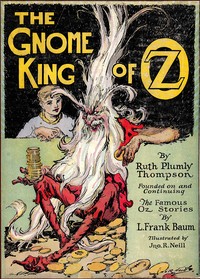
For fans of classic children’s literature: Start with Kingsley’s The Water-Babies (ID 231) for a blend of fairy tale and satire, then Potter’s The Tailor of Gloucester (ID 250) for precise domestic observation, and end with Thompson’s The Gnome King of Oz (ID 304) for whimsical adventure.
For readers interested in speculative futures: Begin with Verne’s Robur the Conqueror (ID 236) to explore early airship fiction, then In the Year 2889 (ID 256) for a futuristic newsroom, and finally Pohl’s The Tunnel Under the World (ID 272) for a mind-bending conspiracy.
Bibliographic dates and catalogue measurements
The catalogue distinguishes the Project Gutenberg digital release from a work’s original or first publication. Project Gutenberg is identified as the digital source for the edition available here; its release year is therefore shown as Gutenberg Release Year, not as the work’s original publication year.
When an explicit first-publication or issue date can be supported directly by the title or issue information, it may be shown separately as First Publication Year. When that date cannot be confirmed, the catalogue displays Not confirmed rather than guessing a year.
Where the source text can be measured reliably, the catalogue may provide word count and estimated reading time. These measurements describe reading scope and are not quality rankings.
The current catalogue contains 4 active subject categories: Exploration Survival Adventure Tales, Fantasy Juvenile Worlds, Time Travel Speculative Futures, and Relationships Society Historical Narratives. Categories are browsing aids and may overlap where a work reasonably fits more than one subject.
- Featured

- Featured