1

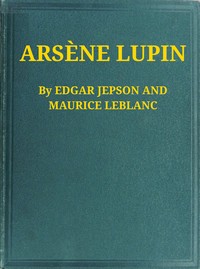
Arsène Lupin — A Closer Reading
(0 User reviews)
380
Project Gutenberg
2003
Not confirmed
Burglars -- Fiction; Lupin, Arsène (Fictitious character) -- Fiction
Readers of public-domain and historical texts
Project Gutenberg digital edition
en
Edition facts
Words
75,325
Reading time
328 min
Text sections
24
Arsène Lupin — A Closer Reading can be approached with a clearer sense of reading commitment from its source measurements: 75,325 words, 5 hr 28 min estimated reading time, and 24 detected text sections.
The text analysis averages about 11.5 words per sentence, while the detected sections provide another way to judge how the source is divided.
Project Gutenberg metadata also associates the work with “Burglars -- Fiction,” connecting these edition facts with the source record’s subject description.
Source:
Project Gutenberg record #4014
This editorial note examines Maurice Leblanc's diction and dialogue in the opening chapters of Arsène Lupin, focusing on the contrast between opulent description and clipped, ironic speech, and how the Duke's languid tone hints at hidden depths.
Read the complete public-domain text at its original source.
Read on Project GutenbergThe first chapter of Arsène Lupin opens with a long, painterly description of the château of the Dukes of Charmerace, where sunlight falls on “armour of brightly polished steel” and “the fading gilt of the First Empire chairs.” The prose lingers on the jumble of costly objects, then narrows to the face of Sonia, a girl whose “clear, germander eyes” and “wistful melancholy of the Slav” are described in equally lavish terms. This ornate, almost decadent style sets a tone of luxury and hidden fragility.
Yet as soon as characters speak, the language shifts. The Duke’s first line to Guerchard is a dry joke: “I hope the burglars have not stolen the coronet.” His speech is clipped, ironic, and full of deliberate understatement. The contrast between the narrator’s rich descriptions and the characters’ terse, evasive dialogue is one of the book’s most striking authorial choices.
The Weight of Description
The narrator devotes nearly two hundred words to the château’s interior before introducing a single character. Objects are catalogued with a specificity that suggests both wealth and clutter: “rare porcelain,” “Oriental or Renaissance cabinets,” “Persian rugs.” The effect is almost oppressive—beauty without taste, as the narrator notes, “jumbled together with the execrable taste which so often afflicts those whose only standard of value is money.” This judgment is unusual for an adventure story; it signals that the setting itself is a kind of trap, a museum of conspicuous consumption.
When Sonia appears, she is described in the same objectifying language: her skin is “clear with the transparent lustre of old porcelain,” her cheeks “tinted with the pink of the faintest roses.” She becomes another precious item in the room. The narrator’s eye moves from furniture to face without a break in register, implying that people, too, are part of the collection. This technique establishes a world where value is measured in surfaces, and where the reader must look beneath the gilding.
Dialogue as Mask
Once the Duke speaks, the prose contracts. His exchanges with Guerchard are built on short, polite deflections. When Guerchard announces that Sonia must stay in her room, the Duke replies, “Really, M. Guerchard… This last measure—a child like that!” The ellipsis and the faint nod to Sonia suggest a performance: the Duke plays the role of a concerned but ineffectual aristocrat. His earlier banter about “paper-knives” and “wedding presents” is similarly evasive, using flippancy to avoid engagement.
Sonia’s speech is equally guarded. She answers Guerchard’s orders with an “indifferent tone” and a cold “Very well.” The narrator notes that she “composed her face to something of its usual gentle calm” when footsteps approach—a skill “of long practice in hiding her feelings.” Dialogue in these chapters is rarely direct; it is a screen. Characters say less than they mean, and the reader must watch for the small gestures—the nod, the tinge of colour—that betray the truth.
The Telegram as Turning Point
The arrival of Lupin’s telegram shatters the controlled tone. The millionaire Gournay-Martin “bellows” the message, and the prose becomes abrupt: “Here! A telegram! A telegram from the scoundrel himself!” The telegram’s language is cheeky and intimate—“Yours affectionately, ARSÈNE LUPIN”—a direct contrast to the Duke’s polished irony. The Duke dismisses it as “humbug,” but the word itself is a shrug, a refusal to take the threat seriously.
This moment marks a shift from description to action. The leisurely opening paragraphs give way to a series of short, tense scenes. The narrator no longer lingers on furniture; instead, we get quick cuts: the Duke frowning, Guerchard shrugging, the inspector hurrying. The telegram is a plot device, but it also functions as a stylistic intrusion—Lupin’s voice, even quoted secondhand, is more energetic and direct than anyone else’s. It hints that the real energy of the story lies outside the château’s gilded rooms.
Voice and the Unreliable Narrator
The narrator of Arsène Lupin is not neutral. The opening paragraph’s judgment of “execrable taste” is a value statement, not a neutral description. Later, the narrator calls Sonia’s beauty “the most beautiful and the most precious” of all the objects in the room—a comparison that flattens her into an asset. This narrative voice is complicit in the world it describes: it admires luxury while sneering at it, and it treats characters as either decorative or suspicious.
This ambiguity extends to the Duke. The narrator reports his actions without comment, leaving the reader to infer his motives. When the Duke “gazed at her with eyes full of an infinite sympathy and compassion,” the phrasing is almost parodic—too grand to be entirely sincere. The narrator may be winking at the reader, or may simply be adopting the florid style of a certain kind of adventure fiction. Either way, the voice is a character in itself, and its shifts in register—from lush to clipped, from judgmental to deadpan—are worth watching.
These early chapters reward attention to the gap between what is said and what is described. The narrator’s eye lingers on surfaces; the characters’ words skate over depths. Pay particular attention to the Duke’s asides and the narrator’s asides—both may be telling a different story from the one on the page. The book’s pleasure lies not in the plot alone, but in the tension between its ornate frame and its slippery center.
There’s a certain delight in watching a gentleman’s polished speech conceal his true nature, as with Lupin’s languid irony. That quiet pleasure returns in It Was Marlowe: A Story of the Secret of Three Centuries — Story, Setting & Ideas, where every elegant line seems to whisper of hidden depths, much like an old friend’s familiar yet unreadable smile. Both works share that hush of secrets waiting politely. Arsène Lupin taught me to listen for what words avoid saying.
There are no reviews for this eBook.
There are no comments for this eBook.
Reader reflection
Record your reading impressions
A brief reflection can help important ideas stay with you longer.
Your progress
0
/
10
2
Did this book hold your interest?
3
How likely are you to recommend this book?
4
How demanding did the text feel?
5
Could you see yourself revisiting this book?
6
Did you gain anything practical from the text?
7
How distinctive were its ideas or approach?
8
How personally connected did you feel to the book?
9
What is the main idea you are taking away?
10