1

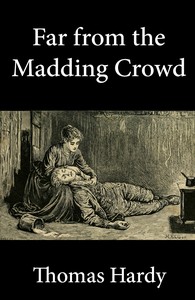
Far from the Madding Crowd — Reading Companion
(0 User reviews)
248
Project Gutenberg
1992
Not confirmed
Didactic fiction; Love stories; Triangles (Interpersonal relations) -- Fiction; Pastoral fiction; Farm life -- Fiction; Women farmers -- Fiction; Wessex (England) -- Fiction
Readers of public-domain and historical texts
Project Gutenberg digital edition
en
Edition facts
Words
145,789
Reading time
634 min
Text sections
58
Far from the Madding Crowd — Reading Companion can be approached with a clearer sense of reading commitment from its source measurements: 145,789 words, 10 hr 34 min estimated reading time, and 58 detected text sections.
The text analysis averages about 17.4 words per sentence, while the detected sections provide another way to judge how the source is divided.
Project Gutenberg metadata also associates the work with “Didactic fiction,” connecting these edition facts with the source record’s subject description.
Source:
Project Gutenberg record #27
Thomas Hardy's novel follows Bathsheba Everdene, a headstrong woman farmer, and her relationships with three suitors: the steadfast shepherd Gabriel Oak, the wealthy farmer Boldwood, and the dashing Sergeant Troy. The excerpts reveal Hardy's detailed rural setting, psychological depth, and dramatic confrontations.
Read the complete public-domain text at its original source.
Read on Project GutenbergThomas Hardy's Far from the Madding Crowd opens with a description of Farmer Oak, a man whose name reflects his sturdy, unpretentious nature. The narrative voice is precise, noting that Oak's 'features were unmarked by any of the moving and wonky shadows of passion'—a phrase that immediately signals Hardy's interest in character psychology. The early chapters establish a world of agricultural labor, with detailed accounts of sheep-keeping and rural customs. The first meeting between Gabriel Oak and Bathsheba Everdene occurs when she is on horseback, and their conversation reveals her independent spirit. Hardy's prose is both lyrical and concrete, grounding emotional drama in the physical landscape of Wessex.
The Opening: A Shepherd's World
The novel begins with a careful portrait of Gabriel Oak, a man whose 'ordinary' appearance belies his competence and depth. Hardy describes his 'steady, deliberate' movements and his 'well-known' face among the sheep. The opening chapter, 'Description of Farmer Oak—An Incident,' immediately establishes the importance of rural labor and the rhythms of farm life. The incident—a swarm of bees—shows Oak's practical skill and his quiet authority. Hardy's narrator observes that Oak's 'ambition was to be a farmer of the old school,' setting up a contrast with the changing times. The language is unhurried, matching the pace of agricultural work, yet it is punctuated by moments of sharp observation, such as when Oak's 'eyes were as blue as the sky'—a detail that hints at his clear-sightedness.
Bathsheba's Entrance and Independence
Bathsheba Everdene first appears in Chapter III, 'A Girl on Horseback—Conversation.' She is described as 'a young lady' who is 'not a woman of the world' but possesses a 'self-dependence' that is immediately striking. Her dialogue with Oak reveals her pride and her resistance to being managed. When Oak offers to help her with her horse, she replies, 'I can manage it myself,' a line that encapsulates her character. Hardy's portrayal of Bathsheba is nuanced: she is both vain and capable, flirtatious and serious. The narrative notes her 'bright, clear eyes' and her 'quick, intelligent glance,' but also her 'tendency to coquetry.' This early scene sets up the central tension of the novel: Bathsheba's desire for autonomy versus the social pressures of marriage and reputation.
The Confrontation with Boldwood
The excerpt from later in the novel shows a dramatic confrontation between Bathsheba and the farmer Boldwood. His language is intense and possessive: 'I have lost my respect, my good name, my standing—lost it, never to get it again.' Boldwood's fury is directed at Sergeant Troy, whom he accuses of stealing Bathsheba's affection. The dialogue is charged with emotion, as Boldwood oscillates between rage and self-pity. Bathsheba's response—'I am only a girl—do not speak to me so!'—reveals her vulnerability, but she also stands her ground: 'If a thousand of you sneer and say things against me, I will not be put down!' Hardy's use of exclamation marks and short, staccato sentences conveys the intensity of the scene. The narrator's comment that 'the most tragic woman is cowed by a tragic man' underscores the power dynamics at play.
Hardy's Narrative Voice and Structure
Throughout the excerpts, Hardy's narrator maintains a detached yet sympathetic tone. He frequently steps back to offer general observations, such as 'the most tragic woman is cowed by a tragic man,' which give the story a philosophical dimension. The structure of the novel is episodic, with chapter titles that often summarize the action: 'The Fair—The Journey—The Fire,' 'The Great Barn and the Sheep-Shearers.' These titles guide the reader through the seasonal rhythms of farm life. Hardy also uses vivid imagery, such as 'the impending night appeared to concentrate in his eye,' to create atmosphere. The dialogue is naturalistic, capturing the dialects of rural Wessex, while the narrative voice remains formal and literary. This combination of earthy realism and elevated prose is a hallmark of Hardy's style.
As you read Far from the Madding Crowd, pay attention to how Hardy uses the landscape and the changing seasons to mirror the characters' emotional states. The novel's title, taken from Thomas Gray's 'Elegy Written in a Country Churchyard,' suggests a retreat from the chaos of urban life, but the story itself is full of passion and conflict. Notice how Hardy balances Bathsheba's perspective with those of her suitors, and how the rural setting is not just a backdrop but an active force in the narrative. The book rewards careful reading of its descriptive passages and its psychological insights.
Watching Bathsheba pace her farm, stubborn as the seasons, I think how Hardy’s people learn through quiet ruin. There’s a gentler schooling in that old Dickens As an Educator — A Closer Reading, where character grows not from thunderclaps but patient, daily tending. Both books seem to whisper the same thing: we are shaped by what we endure, slowly. I’ve shelved them near each other for years now.
There are no reviews for this eBook.
There are no comments for this eBook.
Reader reflection
How did this book work for you?
Your answers remain private and are stored only in this browser.
Your progress
0
/
10
2
Did this book hold your interest?
3
How likely are you to recommend this book?
4
How demanding did the text feel?
5
Would you start a conversation about this book?
6
Could you follow the author’s main argument?
7
How would you describe its reading pace?
8
Which part made the strongest impression?
9
What is the main idea you are taking away?
10