1

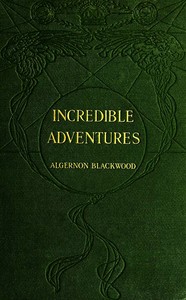
Incredible Adventures — Story, Setting & Ideas
(0 User reviews)
2839
Project Gutenberg
2013
Not confirmed
Paranormal fiction
Readers of public-domain and historical texts
Project Gutenberg digital edition
en
Edition facts
Words
108,481
Reading time
472 min
Text sections
10
This digital edition of Incredible Adventures — Story, Setting & Ideas is described by source-level measurements including 108,481 words, 7 hr 52 min estimated reading time, and 10 detected text sections.
The text analysis averages about 16.1 words per sentence, while the detected sections provide another way to judge how the source is divided.
Project Gutenberg metadata also associates the work with “Paranormal fiction,” connecting these edition facts with the source record’s subject description.
Source:
Project Gutenberg record #43816
Algernon Blackwood's collection of five novellas blends psychological realism with supernatural suspense. The opening tale follows a tutor's failed attempt to reform a young lord, while later stories explore religious dread, eerie encounters, and the uncanny. Blackwood's prose shifts between measured observation and charged, atmospheric unease.
Read the complete public-domain text at its original source.
Read on Project GutenbergAlgernon Blackwood's Incredible Adventures (1914) opens with a tutor's weary assessment of his charge, Lord Ernie, after nine months of global travel. The narrator, John Hendricks, notes that the expedition has 'accomplished very little'—a candid admission that sets a tone of grounded, psychological realism. Blackwood's voice here is measured, almost reportorial, detailing Hendricks's disappointment and the boy's 'ceaseless cigarette smoke.' Yet this restrained opening belies the collection's turn toward the supernatural. In a later excerpt, the narrative shifts dramatically: a tense staircase confrontation with a devout housekeeper, Mrs. Marsh, crackles with religious anxiety. Her 'iron doll' face and 'implacable' stare introduce a gothic intensity, while the dialogue on salvation and damnation reveals Blackwood's skill at embedding metaphysical dread in ordinary settings.
From Measured Observation to Gothic Unease
The collection's first excerpt establishes a narrator who is introspective and slightly defeated. Hendricks describes himself as 'honest, upstanding,' but also 'poor, proud, ambitious'—a man aware of his own limitations. Blackwood's prose here is efficient, building character through action and understatement. The tutor's hope to 'make a man of him' is undercut by the boy's tolerant good nature and the looming failure of the enterprise. This psychological realism gives way, in the second excerpt, to a very different register. The staircase scene with Mrs. Marsh is charged with symbolic weight: her black attire, prayer books, and 'shaking beads of jet' evoke a funereal presence. The narrator's internal shift—from irritation to a 'secret desire to attack'—mirrors the story's pivot from social observation to supernatural tension. Blackwood uses dialogue as a weapon, with Mrs. Marsh's unctuous replies ('Some of us still goes, sir') carrying a 'deferential insolence' that unnerves the narrator. The language becomes more visceral: 'She glittered. I felt hate in her.'
The Weight of Religious Language
Blackwood's handling of religious discourse is central to the collection's unsettling effect. In the first excerpt, religion is absent; Hendricks's concerns are secular and pedagogical. But the second excerpt plunges into a debate over salvation and damnation. The narrator's challenge—'No merciful, all-foreseeing God could ever have devised such a fearful plan'—is met with Mrs. Marsh's rigid orthodoxy. Her truncated sentence ('for the others, sir, 'oo——') and the 'gloom about her like a hearse' transform a theological argument into a physical presence. Blackwood does not resolve the debate; instead, he lets the atmosphere thicken. The housekeeper's final, faltering question about 'a drop of cold water' moistening the lips of the damned suggests a flicker of humanity, but it is quickly suppressed. The narrator's interruption ('the foolish talk had lasted long enough') returns the scene to mundane control, yet the unease lingers. This pattern—introducing supernatural or religious dread through everyday encounters—recurs across the collection, as Blackwood uses language to blur the boundary between the rational and the numinous.
Pacing and the Unseen
The excerpts reveal a deliberate manipulation of pace. The opening of 'The Regeneration of Lord Ernie' moves slowly, with long paragraphs detailing Hendricks's background and the trip's itinerary. Blackwood builds a sense of ordinary time—'middle October,' 'leisurely for the ancestral halls'—before the supernatural, if it comes, can disrupt it. In contrast, the staircase scene is compressed and urgent. The narrator's 'dangerous descent' and the sudden appearance of Mrs. Marsh create a moment of vertigo. Blackwood uses short, punchy sentences: 'She looked at me like a knife.' The dialogue accelerates, with interruptions and half-finished thoughts, until the narrator cuts it off. This shift in tempo—from measured exposition to breathless confrontation—is a hallmark of Blackwood's technique. He often lets the uncanny emerge in gaps: the pause before Mrs. Marsh speaks, the 'curious expression' in her eyes, the unfinished sentence. These silences carry more weight than explicit horror, inviting the reader to imagine what remains unsaid.
Readers approaching Incredible Adventures should attend to Blackwood's narrative rhythms. The collection rewards those who notice how a character's offhand remark or a change in setting can signal a shift from the mundane to the eerie. Blackwood rarely explains the supernatural; he lets it seep through cracks in dialogue and description. Pay particular attention to moments of hesitation—a character's pause, a half-spoken thought—as these often carry the story's true weight. The book's title promises adventure, but the real journey is inward, into the unsettled spaces of belief and perception.
I finished that Blackwood collection feeling unsettled in the best way, especially how the tutor's quiet failure kept echoing. It reminded me of something deeper in Max Havelaar; — Background and Themes—that ache when good intentions meet a world that refuses to bend. Both left me thinking about the weight of seeing clearly, long after I set them down.
There are no reviews for this eBook.
There are no comments for this eBook.
Reader reflection
Record your reading impressions
A brief reflection can help important ideas stay with you longer.
Your progress
0
/
10
2
How much did you enjoy the reading experience?
3
How likely are you to recommend this book?
4
How demanding did the text feel?
5
Did the story or argument move comfortably?
6
How original did the book feel?
7
Would a second reading be valuable?
8
How closely did the book connect with your experience?
9
Which lesson or insight stayed with you?
10