1

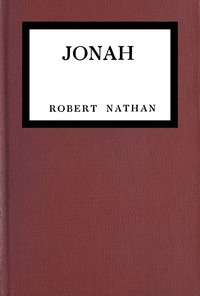
Jonah — A Closer Reading
(0 User reviews)
906
Project Gutenberg
2025
Not confirmed
Jonah (Biblical prophet) -- Fiction
Readers of public-domain and historical texts
Project Gutenberg digital edition
en
Edition facts
Words
34,200
Reading time
149 min
Text sections
22
The source record for Jonah — A Closer Reading measures this digital text at 34,200 words, 2 hr 29 min estimated reading time, and 22 detected text sections.
The text analysis averages about 13.5 words per sentence, while the detected sections provide another way to judge how the source is divided.
Project Gutenberg metadata also associates the work with “Jonah (Biblical prophet) -- Fiction,” connecting these edition facts with the source record’s subject description.
Source:
Project Gutenberg record #76998
Robert Nathan's 1925 novel reimagines the biblical prophet Jonah as a reluctant, weary figure caught between divine calling and human desires. The narrative moves from desert asceticism to urban courtship, blending sacred and mundane with a fox, a gourd, and a priest's pragmatic counsel.
Read the complete public-domain text at its original source.
Read on Project GutenbergThe novel opens not with a storm at sea but with a fox. In the desert beyond Jordan, Jonah shares his meal with a fox that recognizes him as "the man of God." This small, strange encounter sets the tone for a narrative that moves between the holy and the homely, the prophetic and the personal. The desert community of prophets is depicted with earthy detail: they live in clay huts, converse with angels, and dine alongside lions and gazelles. Yet Jonah's thoughts are grave, and his journey southward toward the Land of Tob is marked by a shiver and a drawn cloak—a prophet already weary of his calling.
Desert Community and Its Creatures
The opening chapters establish a world where the sacred is woven into the everyday. Prophets live in caves and rude huts, their ears "pierced by the sweetness of God's voice." They share meals with lions, foxes, and ravens, many of whom are "holy beings; more than human, but less than divine." This blurring of animal and angelic is characteristic: the fox that speaks to Jonah is neither a mere symbol nor a comic aside, but a creature with its own theological curiosity. When the fox remarks, "I am not a theologian," it undercuts the gravity of prophecy with a gentle, almost domestic humor. The desert is not a barren stage but a crowded, living space where the divine and the creaturely coexist in uneasy intimacy.
From Prophecy to Priesthood
Jonah's dissatisfaction emerges not from a failed mission but from a mundane desire: he wishes to marry. Standing before the High Priest Amaziah, he confesses, "I am weary of being a prophet" and asks to become a priest instead. Amaziah's response is layered with worldly wisdom: "One does not change the course of one's life with impunity, or for no reason." The dialogue is sharp and ironic, with Amaziah noting that the wealthy "feel obliged to add to their fortune" while the poor can afford to be generous. Jonah's crisis is not theological doubt but economic anxiety—he needs a living to marry Judith, whose father demands a dowry. The prophet's hands are "empty, and brown as the earth," a stark contrast to the silver mirror and pots of paste in Judith's chambers.
The Movement Between Desert and City
The narrative structure alternates between the austere desert and the cultivated world of Joppa. In the desert, prophets draw together in an "austere community," their lives defined by poverty, danger, and glory. In Joppa, Judith's cheeks are "pink as the youngest roses," and her maid Sarah reflects that "a woman should know her own worth." This shift in setting is mirrored in the prose: the desert scenes are filled with silence, cold dew, and the green sky of early night; the city scenes introduce commerce, cosmetics, and social calculation. Jonah moves between these worlds, carrying his gourd and stick, but also his longing for a settled life. The tension is not resolved but held open, as the prophet stands at a threshold between two ways of being.
Recurring Images and Quiet Irony
Certain images recur with a quiet insistence: the gourd filled with water, the empty hands, the eagle's feather. These objects are not symbolic in a heavy-handed way but function as markers of Jonah's state. The gourd is practical, the hands are empty, the feather is a gift that is not brought. The novel's irony is understated: when Amaziah greets Jonah with "do you not bring me another war?" the humor is dry and knowing. The High Priest's face is "sharp and cruel as a hawk's," yet he speaks with gentleness. The fox's theological disclaimer, the maid's pragmatic maxim, the prophet's weary confession—all contribute to a tone that is neither reverent nor satirical, but observant and slightly melancholy.
Readers familiar with the biblical Jonah will find a different figure here: one who is tired, hungry, and in love. Nathan's novel does not retell the familiar story of the whale but instead imagines the prophet's inner life before the voyage. The fox, the gourd, the empty hands—these details invite attention to the small, telling moments that accumulate into a portrait of a man caught between the divine and the domestic. The narrative moves with a deliberate, unhurried pace, rewarding those who attend to its quiet ironies and precise observations.
I keep thinking about how Nathan’s Jonah finds himself tangled between the holy and the everyday, never quite at home in either. It reminded me of wandering through that old heist story, The Great Green Diamond; Or, Thief Against Thief — Inside the Classic, where even the chase feels less like adventure and more like a quiet, exhausted prayer. Both left me holding something tender and strange, longer than I expected.
There are no reviews for this eBook.
There are no comments for this eBook.
Reader reflection
What was your reading experience?
Capture what you thought, learned, and would like to remember.
Your progress
0
/
10
2
How much did you enjoy the reading experience?
3
Would you pass this book on to a friend?
4
How much effort did this book require?
5
Did this book create an emotional response?
6
How would you rate its originality?
7
How closely did the book connect with your experience?
8
How valuable was this book for your own interests?
9
What is the main idea you are taking away?
10