1

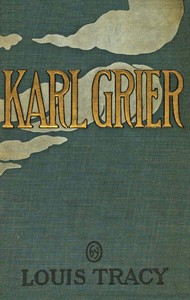
Karl Grier — Text and Context
(0 User reviews)
427
Project Gutenberg
2025
Not confirmed
Psychic ability -- Fiction
Readers of public-domain and historical texts
Project Gutenberg digital edition
en
Edition facts
Words
70,980
Reading time
309 min
Text sections
28
This digital edition of Karl Grier — Text and Context is described by source-level measurements including 70,980 words, 5 hr 9 min estimated reading time, and 28 detected text sections.
The text analysis averages about 17.7 words per sentence, while the detected sections provide another way to judge how the source is divided.
Project Gutenberg metadata also associates the work with “Psychic ability -- Fiction,” connecting these edition facts with the source record’s subject description.
Source:
Project Gutenberg record #76603
Louis Tracy's 1905 novel uses a first-person narrator to frame the extraordinary career of Karl Grier, a man with a sixth sense. The opening chapter establishes a tone of skeptical reportage, while later excerpts show a shift to dramatic, eyewitness accounts of psychic phenomena and violent episodes.
Read the complete public-domain text at its original source.
Read on Project GutenbergThe novel opens with a narrator who adopts a defensive, almost combative tone toward skeptics, declaring that certain learned critics “refute with scorn the suggestion that such a person ever lived.” This framing device immediately signals that the story will be an account of disputed, extraordinary events. The narrator positions himself as a chronicler of Karl Grier’s “unknown power,” which he claims Grier exercised “in a marvelous way during several eventful years.” The voice is that of a journalist or gentleman-scholar, carefully distancing himself from the sensational material he presents.
A Narrator on the Defensive
The first chapter establishes a rhetorical posture that recurs throughout the excerpts: the narrator anticipates disbelief. He characterizes critics as “true children of the dull tribe” who build “dogmatic walls” against knowledge. This language is more heated than a simple preface; it suggests the narrator has a personal stake in vindicating Grier. The phrasing “if aught could make Karl angry” implies a close acquaintance, yet the narrator never claims to have witnessed Grier’s powers firsthand. Instead, he relies on secondhand accounts, such as the testimony of a “square-faced man” who describes Constantine’s suicide. This layered narration—a reporter relaying another’s story—creates a sense of distance and uncertainty.
Shifts in Pace and Sensory Detail
The excerpts show a marked change in pacing between the opening chapter and later scenes. The early pages move slowly, filled with abstract arguments about scientific skepticism. In contrast, the account of Constantine’s death is rapid and visceral: a “screech like a wild Indian,” a dagger “stab[bing] savagely at the air,” and a “green” complexion. The narrator shifts from generalities to specific, almost cinematic details—the “cataracts of boxes and steamer trunks,” the “crescendo of broken exclamations.” This acceleration mirrors the sudden intrusion of violent psychic phenomena into ordinary life. The shark hallucination, though not explicitly linked to Grier’s power in the excerpts, hints at a pattern of supernatural perception.
Recurring Motifs: Water, Madness, and the Unseen
Water appears as a persistent backdrop: Constantine gazes at waves for hours, then throws himself into the Mersey. The shark he imagines is a creature of the deep, unseen by others. This motif may connect to Grier’s “sixth sense,” which the narrator describes as an “unknown power.” The excerpts also emphasize madness as a possible explanation—Constantine is suspected of delirium tremens, and his actions are called “last madness.” Yet the narrator resists this reduction, instead presenting the events as genuine mysteries. The tension between rational explanation and supernatural possibility drives the narrative forward, leaving the reader to weigh the evidence alongside the skeptical narrator.
Readers should attend to the narrator’s evolving relationship with the evidence he presents. His initial confidence gives way to reliance on witnesses, and his tone shifts from argumentative to almost elegiac by the closing chapters. The novel’s structure—a series of episodes framed by a single narrator—invites scrutiny of how each account is filtered. Pay particular attention to moments when the narrator’s own doubts surface, as they may reveal more about Karl Grier than the reported events themselves.
I keep thinking about how Tracy’s Karl Grier makes you trust the strange through a plain voice, like a neighbor recounting a storm. It reminds me of reading that quieter tale about the Gloucester tailor, where small, careful hands work wonders without fuss — each book a different shade of wonder. The Tailor of Gloucester — Themes and Context stays with me in its own soft way.
There are no reviews for this eBook.
There are no comments for this eBook.
Reader reflection
Take a moment to reflect on this book
Create a short personal record of your experience with this book.
Your progress
0
/
10
2
How did the book work for you overall?
3
Is this a title you would suggest to others?
4
What was the reading difficulty like?
5
How well did it match your expectations?
6
How would you rate its originality?
7
What did you think about the pace?
8
How useful did the reading feel?
9
Which lesson or insight stayed with you?
10