1

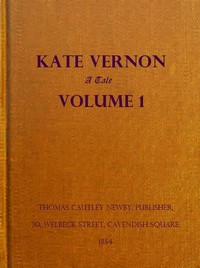
Kate Vernon: A Tale. Vol. 1 (of 3) — Context and Discussion
(0 User reviews)
2509
Project Gutenberg
2014
Not confirmed
Fiction
Readers of public-domain and historical texts
Project Gutenberg digital edition
en
Edition facts
Words
48,201
Reading time
210 min
Text sections
6
Kate Vernon: A Tale. Vol. 1 (of 3) — Context and Discussion can be approached with a clearer sense of reading commitment from its source measurements: 48,201 words, 3 hr 30 min estimated reading time, and 6 detected text sections.
The text analysis averages about 24.3 words per sentence, while the detected sections provide another way to judge how the source is divided.
Project Gutenberg metadata also associates the work with “Fiction,” connecting these edition facts with the source record’s subject description.
Source:
Project Gutenberg record #47338
Mrs. Alexander's 1854 novel opens with a sardonic regimental narrator stationed in a smoky English mill town, where a chance encounter at a ball introduces the title character and her grandfather, setting up a contrast between military worldliness and rural tranquility.
Read the complete public-domain text at its original source.
Read on Project GutenbergThe first chapter, titled "The Ball," introduces a narrator who is a young officer in Her Majesty's —— Regiment of Light Dragoons, recently banished to the smoky, industrial town of Carrington. His voice is wry and self-aware, complaining of the rain, the uncongenial local manufacturers, and the "very awful" brothers. He mentions reading Alison's Account of the Vendean War, a historical work, which hints at his intellectual leanings. The opening establishes a tone of ironic detachment and social observation.
The narrator's encounter with Kate Vernon and her grandfather at a ball forms the core of the excerpt. He describes Kate as "the loveliest girl" and her grandfather as "the most perfect old gentleman," but his reflections are mixed with mundane images like "Mrs. Winter's cap" and "Miss Araminta Cox's yellow turban," suggesting a mind torn between aspiration and levity.
A Narrator with a Distinctive Voice
The narrator's personality emerges through his sardonic asides and self-deprecating humor. He describes the regiment's move to Carrington as a punishment, calling it "an infernal region of smoke and 'sansculottism.'" His complaints about the weather—"I do not believe I ever saw such rain"—and his mockery of the local gentry reveal a man who is both observant and cynical. He references Byron's "nature's tear drops" only to undercut it with "she gave us a shower bath!" This blend of literary allusion and colloquial irreverence defines his narrative style.
His internal conflict is evident when he tries to arrange his thoughts after meeting the Vernons. He lists "sundry rough calculations" about debts and income alongside a "vivid recollection" of his visit, showing a mind pulled between practical concerns and romantic impulses. The narrator's voice is the novel's primary lens, and readers should attend to his shifts between irony and sincerity.
The Social World of the Regiment
The excerpts depict a tight-knit military society with its own hierarchies and tensions. The narrator mentions his Colonel, Dashwood, as "a fine, high-minded, gentleman-like fellow," while he dislikes Hauton, a "cold-hearted roué." His friend Burton is described as "kind-hearted" but "singularly free from imagination," providing a foil to the narrator's more romantic nature. The regiment's boredom in Carrington leads to gossip and speculation, as when the narrator jokes about a fellow officer's "en retrait with Grab'em-all, the field preacher."
The narrator's concern about introducing Hauton to the Vernons—"I would almost rather have been accessory to the introduction of Satan to our first mother"—reveals the moral stakes of social connections. The regiment's dynamics, including the upcoming Doncaster meeting, shape the narrator's decisions and relationships.
Kate Vernon and the Promise of Another Life
Kate Vernon herself appears only briefly in the excerpts, but her impact on the narrator is profound. He describes her home as "refined and tranquil," with an inscription over its entrance that he recalls. The contrast between the Vernons' world and the regiment's is stark: the narrator speaks of "the Arcadian style of early tea and hot cakes" versus the barracks' chaos. He feels he has "got a glimpse of happiness" but senses a "great gulf" between that ideal and his current life.
His attempt to describe A——'s "peace and simplicity" to Burton fails, as Burton lacks imagination. This failure underscores the narrator's isolation and the difficulty of conveying the Vernons' appeal. Readers should note how Kate functions as a symbol of a different, more authentic existence, though the excerpts do not reveal her own perspective.
Structure and Narrative Strategy
The novel is told in first person by a narrator who is both participant and observer. The opening chapter's title, "The Ball," signals a social comedy, but the narrator's reflections on debt, morality, and his own character add depth. The excerpts show a pattern of movement between external events (the ball, conversations with Burton) and internal reverie (his thoughts in the armchair). This alternation creates a rhythm of action and introspection.
The narrator's decision to conceal his meeting with Vernon from Hauton, then to mention it casually, demonstrates his strategic thinking. The text also includes a reference to an inscription over the Vernons' entrance, a detail that may carry symbolic weight. Readers should watch for how the narrator's voice controls the flow of information, revealing and withholding as he chooses.
These excerpts from Volume 1 establish a narrator whose ironic, self-aware voice mediates the story. His encounters with the Vernons introduce a tension between military worldliness and domestic tranquility that will likely drive the plot. Readers should pay attention to the narrator's asides and his descriptions of other officers, as these reveal his values and biases. The novel's structure, alternating between social scenes and solitary reflection, invites a careful reading of how the narrator's perspective shapes the tale.
Reading about that smoky mill town and its sardonic regimental narrator, I found myself smiling at how the bustling ballroom gives way to quieter, rural corners. It reminded me of another story where the glittering surface hides something far more restless beneath. I thought of The Great Green Diamond; Or, Thief Against Thief — Inside the Classic, and how both tales feel like old friends sharing secrets at dusk.
There are no reviews for this eBook.
There are no comments for this eBook.
Reader reflection
What was your reading experience?
Capture what you thought, learned, and would like to remember.
Your progress
0
/
10
2
Did this book hold your interest?
3
How likely are you to recommend this book?
4
Did the language feel accessible?
5
Did anything about the book feel genuinely new?
6
How well did it match your expectations?
7
What was its emotional impact?
8
Did the book give you something worth debating?
9
Which lesson or insight stayed with you?
10