1

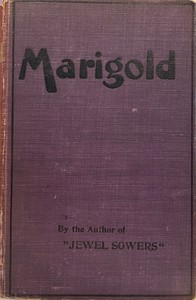
Marigold — Edition Insights
(0 User reviews)
874
Project Gutenberg
2025
Not confirmed
Fantasy fiction
Readers of public-domain and historical texts
Project Gutenberg digital edition
en
Edition facts
Words
67,659
Reading time
295 min
Text sections
39
Before opening Marigold — Edition Insights, the edition data offers a quick orientation: 67,659 words, 4 hr 55 min estimated reading time, and 39 detected text sections.
The text analysis averages about 14.1 words per sentence, while the detected sections provide another way to judge how the source is divided.
Project Gutenberg metadata also associates the work with “Fantasy fiction,” connecting these edition facts with the source record’s subject description.
Source:
Project Gutenberg record #76409
Edith Allonby's Marigold uses a measured, intimate narrative voice to trace a young woman's care for a dying child, Timothy. The prose shifts between quiet domestic detail and moments of emotional intensity, revealing character through restrained dialogue and the weight of unspoken feeling.
Read the complete public-domain text at its original source.
Read on Project GutenbergEdith Allonby's Marigold unfolds through a narrative voice that is both precise and restrained, favoring understatement over overt sentiment. The story's emotional weight accumulates not in grand declarations but in small, telling details: the way Marigold sings evening hymns, the tightness in her throat as she climbs the stairs, the doctor's deliberate silence. Allonby's prose moves between quiet domestic scenes and moments of sharp, almost painful clarity, creating a rhythm that mirrors the slow, inexorable progress of illness. The language is carefully measured, with dialogue that reveals character through what is left unsaid as much as through direct speech. This editorial note examines how the author's control of voice and pacing shapes the reader's experience of loss and devotion.
A Voice of Restraint and Implication
The narrative voice in Marigold is notable for its restraint. Allonby rarely tells the reader what a character feels; instead, she implies it through action and physical detail. When Marigold learns that Timothy is dying, the prose notes only that she “got up and went into the next cottage” and that the stairs felt “somehow so empty and forsaken and quiet.” The emotional weight is carried by the adjectives—empty, forsaken, quiet—rather than by any explicit statement of grief. Similarly, the doctor’s anger is conveyed not through his words but through his deliberate exit “without saying ‘Good-morning’ to them.” This technique forces the reader to infer the characters’ inner states, creating a sense of intimacy and shared understanding. The voice remains consistently close to Marigold’s perspective, yet it never becomes intrusive; it observes her actions and the reactions of others with a kind of quiet, almost clinical attention.
Pacing Through Silence and Repetition
Allonby controls the pace of the narrative through strategic use of silence and repetition. Long stretches of quiet activity—Marigold sewing “silently at the foot of the bed,” the doctor sitting for hours—slow the tempo, drawing the reader into the suspended time of a sickroom. These passages are punctuated by brief, intense exchanges that accelerate the emotional rhythm. For instance, the doctor’s grim offer to stay “till twelve o’clock” and Marigold’s quiet reply, “I sing the hymns to God,” compress a world of tension into a few lines. The repetition of key phrases, such as Timothy’s pet names “Patches” and “Miss Rags,” creates a rhythmic anchor that underscores the bond between the characters. The narrative also uses physical details—the “neat little stitches” of Marigold’s sewing, the “big tears” in Timothy’s eyes—to mark the passage of time and the accumulation of unspoken emotion.
Dialogue as a Window to Character
Dialogue in Marigold is spare but revealing. Characters speak in short, often incomplete sentences, and their words carry subtext that the narrative does not gloss. When Timothy says, “He loves me. So few people ever do that,” the line is delivered without commentary, yet it resonates with the loneliness that pervades the story. The doctor’s dialogue is similarly economical: his offer to stay is presented as a simple statement, but its significance is clear from the context. Allonby also uses dialogue to show shifts in power and affection. When Timothy insists that Marigold stay, the doctor yields, but his earlier attempt to “slip further back in the child’s memory” reveals a quiet struggle. The dialogue never becomes expository; it remains true to the characters’ voices, which are consistent and distinct. This restraint allows the reader to feel the weight of each exchange without being told how to interpret it.
Readers attentive to the craft of Marigold will find that Allonby’s control of language and pacing is the story’s quiet engine. The novel rewards a slow, careful reading—one that notices the spaces between words, the weight of a pause, the significance of a repeated phrase. The narrative does not rush toward its conclusion; it lingers in the moments that matter, trusting the reader to feel their full force. This is a work that achieves its effects through precision and restraint, offering a model of how to write about love and loss without sentimentality.
Reading about Edith’s quiet watch over Timothy, I remembered sitting with my own grandmother those last weeks, the hours measured in spoonfuls of soup and the closing of blinds. That same hush lives in Main Currents in Nineteenth Century Literature - 5. The Romantic School in France — Story, Setting & Ideas, where feeling hides beneath composed sentences. Both books hold loss tenderly, never explaining—just letting the weight settle.
There are no reviews for this eBook.
There are no comments for this eBook.
Reader reflection
Record your reading impressions
A brief reflection can help important ideas stay with you longer.
Your progress
0
/
10
2
How much did you enjoy the reading experience?
3
How likely are you to recommend this book?
4
What was the reading difficulty like?
5
How distinctive were its ideas or approach?
6
Was the book moving at the right speed?
7
Which element worked best for you?
8
How personally connected did you feel to the book?
9
In one sentence, what did you learn?
10