1

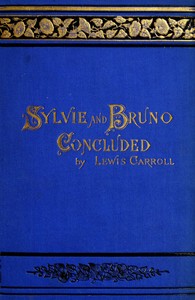
Sylvie and Bruno Concluded (Illustrated) — Text and Context
(0 User reviews)
587
Project Gutenberg
2015
Not confirmed
Fantasy fiction
Readers of public-domain and historical texts
Project Gutenberg digital edition
en
Edition facts
Words
80,906
Reading time
352 min
Text sections
13
Sylvie and Bruno Concluded (Illustrated) — Text and Context can be approached with a clearer sense of reading commitment from its source measurements: 80,906 words, 5 hr 52 min estimated reading time, and 13 detected text sections.
The text analysis averages about 13.3 words per sentence, while the detected sections provide another way to judge how the source is divided.
Project Gutenberg metadata also associates the work with “Fantasy fiction,” connecting these edition facts with the source record’s subject description.
Source:
Project Gutenberg record #48795
This editorial note examines how the opening, middle, and later excerpts of Lewis Carroll's Sylvie and Bruno Concluded guide a first reading, focusing on the preface's defense of spelling innovations, the nested storytelling in 'Bruno's Picnic,' and the interplay between narrator and characters.
Read the complete public-domain text at its original source.
Read on Project GutenbergThe preface to Sylvie and Bruno Concluded offers an immediate, self-aware entry into the book. Carroll announces that he has deliberately avoided reading any reviews of the previous volume, arguing that unfavorable ones make an author cross and favorable ones conceited. He also defends his unconventional spellings—such as “ca’n’t,” “wo’n’t,” and “traveler”—as a firm conviction that popular usage is wrong. This prefatory material signals that the narrative will be punctuated by the author’s own editorial voice, blending fiction with metafictional commentary.
A Preface That Foregrounds Authorial Control
Carroll’s preface does more than thank reviewers and illustrators; it establishes a tone of deliberate idiosyncrasy. He singles out the three “Little Birds” borders drawn by Harry Furniss, praising the artist’s ability to incorporate “the most minute details of the stanzas to be illustrated.” This attention to visual-textual interplay recurs throughout the volume. More strikingly, Carroll refuses to read any reviews of his own book, a stance that distances him from public reception and emphasizes his independence. The preface thus primes readers to expect a work that is self-justifying, playful, and unapologetically peculiar.
Nested Stories and Inventive Logic in “Bruno’s Picnic”
The excerpt from Chapter XIV, “Bruno’s Picnic,” showcases Carroll’s signature technique of embedding stories within stories. Bruno begins a tale about a mouse that is “so tiny” that nothing ever happens to it—because, as he explains, “if anything happened to it, it would die—it were so very tiny!” This circular logic is both absurd and strangely coherent, reflecting a child’s worldview where size determines fate. Sylvie then takes over, but Bruno constantly interrupts to alter details: owls become chickens, mice become rabbits, and “flew” becomes “flied.” The narrator, Arthur, occasionally interjects with deadpan questions, but the children’s inventive corrections drive the scene. The result is a layered conversation where storytelling itself is the subject, and the rules of narrative are negotiated in real time.
The Narrator’s Role as Straight Man and Observer
Throughout the excerpt, the unnamed narrator (often identified with Carroll himself) functions as a foil to the children’s whimsy. When Bruno claims the mouse was “too tiny” for anything to happen, the narrator objects: “However tiny it was, things might happen to it.” Bruno’s pitying look suggests the adult’s logic is irrelevant. Later, the narrator tries to mimic Bruno’s speech (“Owls cry never”), but the imitation only highlights the gap between adult formality and childlike invention. This dynamic recurs in the novel: the narrator is a participant who never fully grasps the fairy logic, leaving readers to decide whether to align with his bewilderment or the children’s creativity.
Illustrations as Integral to the Reading Experience
Harry Furniss’s illustrations are not mere decorations; Carroll’s preface explicitly directs attention to them, particularly the three “Little Birds” borders. The excerpt does not include those pages, but the mention signals that visual elements carry narrative weight. In the picnic scene, the children’s gestures—Bruno stroking Sylvie’s cheek, her arms around his neck—are described in ways that invite pictorial interpretation. Readers of this illustrated edition should pause at each image, considering how Furniss’s drawings amplify or contrast with the text. The interplay between word and image is a central feature of the book, not an afterthought.
First-time readers may find the shifting registers—from Carroll’s defensive preface to the children’s anarchic storytelling—disorienting. Rather than seeking a consistent plot, attend to the book’s fascination with language, logic, and the boundaries between reality and fantasy. The narrator’s confusion is a feature, not a bug: it invites you to share in the delight of a world where a mouse can be too tiny for events, and where every story is subject to revision by its audience.
I’ve often thought Sylvie and Bruno Concluded holds a gentle secret—how its framed tales drift like water, one story nested within another, tender as memory. That same current runs through The Water-Babies — Background and Themes, where transformation happens quietly, beneath surfaces. Both ask us to listen to children’s voices, patient and unhurried, like old friends sharing a bench at dusk.
There are no reviews for this eBook.
There are no comments for this eBook.
Reader reflection
Record your reading impressions
A brief reflection can help important ideas stay with you longer.
Your progress
0
/
10
2
How much did you enjoy the reading experience?
3
Would you recommend this book to another reader?
4
Did the language feel accessible?
5
Would you start a conversation about this book?
6
Would a second reading be valuable?
7
Was the book easy to understand?
8
How would you describe its reading pace?
9
What did this book teach you most?
10