1

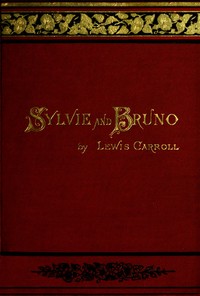
Sylvie and Bruno (Illustrated) — Background and Themes
(0 User reviews)
714
Project Gutenberg
2015
Not confirmed
Fantasy fiction
Readers of public-domain and historical texts
Project Gutenberg digital edition
en
Edition facts
Words
72,046
Reading time
314 min
Text sections
11
Sylvie and Bruno (Illustrated) — Background and Themes can be approached with a clearer sense of reading commitment from its source measurements: 72,046 words, 5 hr 14 min estimated reading time, and 11 detected text sections.
The text analysis averages about 14.3 words per sentence, while the detected sections provide another way to judge how the source is divided.
Project Gutenberg metadata also associates the work with “Fantasy fiction,” connecting these edition facts with the source record’s subject description.
Source:
Project Gutenberg record #48630
This editorial note examines Lewis Carroll's authorial choices in diction, dialogue, and description in Sylvie and Bruno, focusing on the interplay between the narrator's measured voice and Bruno's playful, ungrammatical speech, and the use of dream-like logic and precise physical details.
Read the complete public-domain text at its original source.
Read on Project GutenbergLewis Carroll's Sylvie and Bruno opens with a poem that questions whether life is "but a dream," a theme that permeates the narrative's structure. The prose shifts between the mundane and the fantastical, often without warning, as the narrator encounters fairies in a garden setting. Carroll's authorial choices are evident in the contrast between the narrator's formal, explanatory tone and Bruno's playful, ungrammatical speech. Bruno's dialogue is marked by childish mispronunciations and logical leaps, such as comparing the narrator's face to the moon and explaining its phases as washing. This linguistic playfulness is a deliberate device to create a distinct fairy voice.
Diction and the Fairy Voice
Carroll crafts Bruno's speech with consistent non-standard grammar: "oo" for "you," "doosn't" for "doesn't," and "ca'n't" for "can't." This is not random but systematic, creating a recognizable fairy dialect. For instance, Bruno says, "Oo like Fairies, don't oo?" and later explains that "Nobody never walked on the top of a Fairy." The double negative and invented contractions give Bruno a childlike authenticity while marking him as otherworldly. In contrast, the narrator uses standard English, heightening the contrast between the ordinary human and the fairy realm. Carroll also employs precise, almost scientific descriptions of fairy behavior, such as Bruno's method of weeding: "he always measured each bed before he weeded it, as if he was afraid the weeding would make it shrink." This blend of whimsy and exactness is a hallmark of Carroll's style.
Dialogue as a Window to Character
The exchanges between the narrator and Bruno reveal character through conversational dynamics. Bruno often corrects the narrator's ignorance with a tone of pity, as when he says, "Why, oo might as well say oo'd go to some place where there wasn't any air—supposing oo didn't like air!" This inversion of knowledge—the fairy teaching the human—is a recurring motif. Bruno's logic is internally consistent but absurd by human standards, such as his explanation of why people never tread on fairies: he draws lines on the ground to show where feet go, but cannot explain why one wouldn't step on the fairy. Carroll uses these dialogues to explore the limits of human understanding and the charm of fairy perspective. The narrator's polite, slightly baffled responses ground the fantasy, making Bruno's whimsy more effective.
Descriptive Precision in Fantastical Settings
Carroll's descriptions blend the ordinary and the magical with meticulous detail. In the garden scene, the narrator observes Bruno's gardening with a dead mouse as a tool, and the narrative notes that "the weeding wasn't getting on a bit." The physicality of the fairy world is rendered with concrete specifics: Bruno "thump the mouse with his little fist" when the bed measures wrong. This attention to physical action makes the impossible seem plausible. Similarly, Bruno's explanation of the moon's phases as washing is delivered with a solemn whisper and a hand gesture across his cheeks, grounding the fantasy in bodily movement. Carroll avoids vague enchantment, instead offering precise, almost mechanical descriptions of fairy activities, which paradoxically enhances the sense of wonder.
Structural Choices: Framing and Interruption
The narrative is structured as a frame story, with the narrator recounting his encounters. Carroll uses interruptions and shifts in focus to mimic the unpredictability of dreams. For example, the gardening scene is interrupted by Bruno's sudden offer to get the narrator an invitation to a fairy dinner party, where he would "hand about plates." This abrupt change of subject mirrors the associative logic of dreams. Carroll also includes meta-textual elements, such as the preface where he describes jotting down "odd ideas" and fragments of dialogue, some from dreams. This self-awareness about the construction of the story invites readers to consider the boundary between imagination and reality. The poem at the start and the framing device reinforce the theme of life as a dream, but the narrative itself resists neat resolution, leaving the reader in a state of gentle uncertainty.
Readers attentive to Carroll's linguistic craft will find that Sylvie and Bruno rewards close reading of its dialogue and descriptive passages. The fairy world is built not through grand set-pieces but through small, precise details and the consistent voice of Bruno. The interplay between the narrator's rationality and Bruno's playful logic invites reflection on how language shapes our perception of reality. This edition, with Harry Furniss's illustrations, offers a visual complement to Carroll's verbal inventiveness.
Reading the editorial note on Sylvie and Bruno, I was struck by how Carroll’s precise, physical details anchor his dreamlike whimsy—the way a measured sentence can make a fantastical moment feel almost tangible. It quietly reminded me of another old story, Andy Grant's Pluck — A Closer Reading, where a boy’s practical grit carries the same curious weight, grounding his own small adventures in a world that feels both earnest and strange.
There are no reviews for this eBook.
There are no comments for this eBook.
Reader reflection
Take a moment to reflect on this book
Create a short personal record of your experience with this book.
Your progress
0
/
10
2
What was your overall reaction to the book?
3
Would you encourage someone else to read it?
4
What was the reading difficulty like?
5
How did the reading compare with what you expected?
6
How would you describe its reading pace?
7
Did it raise ideas you would like to talk about?
8
Did the book offer a fresh perspective?
9
Which lesson or insight stayed with you?
10