1

The Tiger of Mysore: A Story of the War with Tippoo Saib — Themes and Context
(0 User reviews)
1642
Project Gutenberg
2006
Not confirmed
Tipu Sultan, Fath 'Ali, Nawab of Mysore, 1753-1799 -- Juvenile fiction; India -- History -- Mysore War, 1799 -- Fiction
Readers of public-domain and historical texts
Project Gutenberg digital edition
en
Edition facts
Words
140,825
Reading time
613 min
Text sections
12
This digital edition of The Tiger of Mysore: A Story of the War with Tippoo Saib — Themes and Context is described by source-level measurements including 140,825 words, 10 hr 13 min estimated reading time, and 12 detected text sections.
The text analysis averages about 19.9 words per sentence, while the detected sections provide another way to judge how the source is divided.
Project Gutenberg metadata also associates the work with “Tipu Sultan, Fath 'Ali, Nawab of Mysore, 1753-1799 -- Juvenile fiction,” connecting these edition facts with the source record’s subject description.
Source:
Project Gutenberg record #18813
Henty's novel follows young Dick Holland's search for his captive father during the Mysore War, using disguise, observation, and local allies. The excerpts show a focus on Tippoo's cruelty, the plight of prisoners, and the strategic use of disguise.
Read the complete public-domain text at its original source.
Read on Project GutenbergFrom its preface, Henty frames the Mysore War as a conflict of patience exhausted by Tippoo Saib's "abominable cruelties," distinguishing father Hyder Ali's calculated ruthlessness from the son's pleasure in massacre. The novel then opens with Dick Holland learning of his father's disappearance, setting a personal quest within a historical campaign. The excerpts show a pattern: Dick and his companion Surajah repeatedly adopt disguises—first as native soldiers, later as merchants—to move through enemy territory. These scenes emphasize observation over action, as Dick notes troop quality, fortifications, and prisoner conditions. The narrative voice is direct, with dialogue carrying exposition. Henty uses specific details—the Chelah battalions of forced converts, the grain stores in Seringapatam—to build a setting that feels researched rather than imagined.
Disguise as a Narrative Engine
Dick and Surajah's disguises are not merely plot devices; they structure how information reaches the reader. In the excerpt, they dress as native soldiers and walk unchallenged through Seringapatam, allowing Henty to describe the fort's layout, troop composition, and the treatment of prisoners without breaking point of view. The disguise also creates tension: the risk of discovery is always present, but Henty underplays it, focusing instead on what Dick observes. When Dick sees flogged British officers, his emotional reaction—tears, fury—is immediate, but the disguise prevents intervention. This restraint keeps the narrative grounded in reconnaissance rather than rescue, at least in the middle chapters. The pattern suggests that Henty values accurate depiction of setting over melodrama, using disguise as a lens for the reader to see Tippoo's regime from within.
The Prisoner's Plight as Moral Center
The preface declares Tippoo's cruelty the war's justification, and the excerpts bear this out through specific, harrowing details. Dick witnesses white officers in irons, one flogged insensible, denied water by jeering guards. The dialogue—"Death would be a thousand-fold preferable"—is spare but effective. Henty does not linger on gore; instead, he lets the prisoners' words and Dick's tears carry the emotional weight. The old man Pertaub later explains that starvation is used to prevent escape, linking individual suffering to Tippoo's policy. This scene is the moral core of the excerpts: it motivates Dick's desire to kill Tippoo even at cost of his own life, and it justifies the war as framed in the preface. For a first reader, this moment clarifies why the historical context matters—the cruelty is not abstract but witnessed.
Historical Detail Embedded in Dialogue
Henty weaves historical facts into casual conversation. When Dick comments on the Chelah battalions, Surajah explains they are Christian boys forced to convert and serve. The bystanders' remarks provide context without authorial intrusion. Similarly, the description of Seringapatam's fort—two square miles, grain stores for months, a street of shops—comes during a walk, not a lecture. This technique keeps the narrative moving while educating the reader. The map of Southern India and plans of battles listed in the illustrations suggest Henty expected readers to follow the geography. The excerpts show that he trusts his audience to absorb details about troop quality, fortifications, and Tippoo's methods through character observation rather than summary. This approach rewards attentive reading and makes the setting feel lived-in.
Voice and the Limits of the Excerpts
The excerpts cover only the preface and a middle chapter; the opening chapters and conclusion are absent. From what is present, the narrative voice is consistent: third-person limited to Dick, with occasional shifts to Surajah for cultural explanation. The prose is plain, favoring action and dialogue over interiority. Dick is brave but not reckless—he leaves the prison scene before losing control. The excerpts do not reveal whether his father is found, how the war ends, or what role Dick plays in the final battle. The chapter titles hint at escapes, sieges, and a tiger encounter, but the excerpts show only the reconnaissance phase. A first reader should expect a linear adventure with historical interludes, but the emotional arc—Dick's growth from observer to actor—remains unclear from these fragments alone.
The excerpts establish a pattern: Dick learns by watching, and the reader learns with him. Henty's preface sets a clear moral stance, but the novel itself lets scenes speak. Pay attention to what Dick notices about uniforms, fortifications, and prisoner treatment—these details are not decoration but clues to the story's world. The disguise motif suggests that identity and appearance are central, but the excerpts do not reveal how far this theme extends. Read with an eye for how Henty balances historical fact with adventure pacing; the tension between observation and action may define the novel's later chapters.
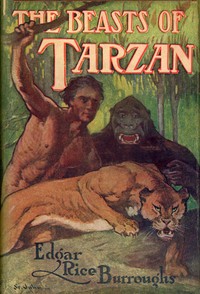
Reading about Dick slipping through Mysore in disguise—watching, waiting, never quite himself—stirred something quiet in me. I remembered long afternoons with the jungle shadows in The Beasts of Tarzan The Beasts of Tarzan — Reading Companion, where the real self hides beneath what others see. Both books made me think about how fathers remain a mystery until you move through their world alone. That ache of searching—it lingers differently. Not loudly, just underneath.
There are no reviews for this eBook.
There are no comments for this eBook.
Reader reflection
How will you remember this book?
Save your reaction, strongest insight, and memorable passage.
Your progress
0
/
10
2
How did the book work for you overall?
3
Would you recommend this book to another reader?
4
How demanding did the text feel?
5
What was its emotional impact?
6
Which part made the strongest impression?
7
How well did it match your expectations?
8
How strong was your personal connection to the text?
9
In one sentence, what did you learn?
10