1

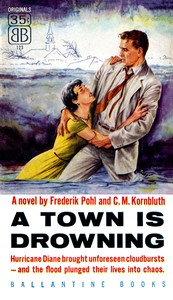
A Town Is Drowning — A Reader’s Guide
(0 User reviews)
536
Project Gutenberg
2021
Not confirmed
Floods -- Pennsylvania -- Fiction
Readers of public-domain and historical texts
Project Gutenberg digital edition
en
Edition facts
Words
51,828
Reading time
226 min
Text sections
5
Before opening A Town Is Drowning — A Reader’s Guide, the edition data offers a quick orientation: 51,828 words, 3 hr 46 min estimated reading time, and 5 detected text sections.
The text analysis averages about 13.1 words per sentence, while the detected sections provide another way to judge how the source is divided.
Project Gutenberg metadata also associates the work with “Floods -- Pennsylvania -- Fiction,” connecting these edition facts with the source record’s subject description.
Source:
Project Gutenberg record #66768
A novel about a Pennsylvania town overwhelmed by floodwaters, following multiple residents as they struggle with the disaster. The narrative shifts between characters like Mickey Groff, the burgess Starkman, and Polly Chesbro, whose interest in gematry adds an unusual layer. The excerpts show a focus on physical details of the flood and the strained interactions among survivors.
Read the complete public-domain text at its original source.
Read on Project GutenbergThe novel opens with Mickey Groff stopping at a filling station in heavy rain, a scene that immediately establishes the pervasive wetness that will define the story. The attendant reluctantly comes out, and Groff wipes mist from his windshield—a small, precise detail that recurs as characters repeatedly struggle to see through water, fog, or tears. The radio cuts from show tunes to a freezer food plan ad, a mundane interruption that contrasts with the rising threat. This early focus on sensory specifics—the feel of mist on skin, the sound of rain, the dimming of lights—anchors the narrative in the physical experience of the flood.
Shifting Perspectives and Fragmented Scenes
The excerpts move between characters without transition, jumping from Groff at the gas station to a later scene where he sits in a garage-turned-feeding station, then to a conversation with Polly Chesbro. This fragmented structure mirrors the disorientation of a disaster: no single viewpoint dominates, and the reader pieces together events through brief encounters. The text does not explain how Groff arrived at the garage or what happened in between; the gaps suggest the chaos of the flood, where time and sequence blur. Polly’s sudden appearance and her talk of “perfect numbers” further disrupts the narrative flow, introducing an intellectual puzzle amid the physical crisis.
Recurring Images of Water and Obstruction
Water is everywhere in the excerpts, not just as rain but as mist, spray, and mud. Groff feels “thin mist on his face” inside the car; later, duckboards are laid over mud in the garage. The flood is not shown directly but implied through these persistent traces. Visibility is constantly blocked: the windshield fogs, the road is hard to see, and characters struggle to perceive each other clearly. This motif of obscured sight—windows, mist, tears—underscores the difficulty of understanding what is happening. Even Polly’s eyes are “unaccountably filled with tears,” linking emotional response to the physical water that surrounds them.
Character Dynamics Through Brief Encounters
Relationships are sketched in quick, loaded exchanges. Polly Chesbro tells Groff that her husband Artie is “out looking for orphans to rob,” a remark that reveals marital tension without elaboration. She also mentions being committed to a mental hospital, yet claims six psychiatrists agree she is sane. Groff’s reaction is weak and noncommittal. The burgess Starkman is dying, needing oxygen, and Polly mothers him while dismissing her own distress. These interactions are dense with implication: the flood has stripped away social niceties, exposing resentments and dependencies. The reader must infer backstories from these fragments, as the narrative provides no exposition.
The Unusual Role of Gematry
Polly Chesbro introduces the concept of gematry, a system of perfect and imperfect numbers, claiming that “two of us would go” based on the difference between six and eight. She references Fermat and Diophantos, grounding her belief in a pseudo-scholarly tradition. This element stands out sharply against the flood’s physical reality, suggesting that some characters seek patterns or meaning in the chaos. Polly insists this is not the time for “important things,” yet she raises the topic unprompted. The excerpts do not reveal whether her predictions come true, leaving the reader to wonder how this numerical mysticism might intersect with the disaster’s outcome.
The novel’s structure—jumping between characters, leaving gaps, and inserting odd details like gematry—demands active reading. Pay attention to what is not said: the missing hours, the unexplained remarks, the characters who appear only briefly. The flood is a constant presence, but the story is equally about the strange, revealing moments that surface when normal life is suspended. Approach the text as a mosaic of fragments rather than a linear narrative, and let the recurring images of water and obscured vision guide your interpretation.
Sometimes a place stays with you long after the water recedes, like the quiet ache in that Pennsylvania town. I felt that same lingering weight after reading Far from the Madding Crowd — Reading Companion—not the flood itself, but how ordinary people hold steady beneath circumstance. Just a slow knowing that resilience isn't loud, it's remembered.
There are no reviews for this eBook.
There are no comments for this eBook.
Reader reflection
Take a moment to reflect on this book
Create a short personal record of your experience with this book.
Your progress
0
/
10
2
How much did you enjoy the reading experience?
3
Would you pass this book on to a friend?
4
How much effort did this book require?
5
How clearly were the main ideas presented?
6
Did the book offer a fresh perspective?
7
How strongly did the book affect you emotionally?
8
How useful were the ideas in this book?
9
In one sentence, what did you learn?
10